
The Florida State University Gymnastics Dynasty
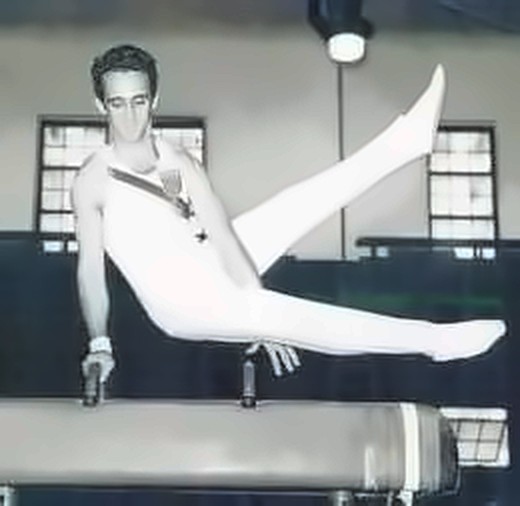
I coached and taught at Miami Dade College for over thirty years, I marveled at the Cuban culture and, in particular, the athletic ability of Cuban gymnasts. I had heard about Rafael Lecuona and his brother Fernando for years from many of the Florida State gymnasts as well as from my coach, Abie Grossfeld; so I was not surprised when I met him in Las Vegas in December of 2004 when the International Gymnastics Hall of Fame was roasting another one of my coaches, Jamile Ashmore, the three-time Pan American Games gold medalist. I sat down with Rafael a few months later for an interview at the third annual reunion of the Florida State University men’s and women’s gymnastics team held at Alligator Point on Memorial Day weekend a few days before Rafael seventy-seventh birthday. I not only found a great gymnast, but a distinguished, handsome, highly educated, energetic individual who I call the “genteel and debonair professor”.
Most important, America would have missed him completely if it were not for one important decision he made in l953. In Cuba, Rafael was single, handsome and athletic. He was looking forward to being promoted to head cashier at the “Romeo and Juliet” cigar factory in Cuba after the death of his boss, the head cashier, when he was suddenly asked to train another man for the head cashier’s job at the factory. The writing was on the wall, he was being passed over for another man from the famous cigar company.
Already an established gymnast, Rafael had competed in the 1948 London Olympics, the 1951 Pan American Games in Buenos Aires and the 1952 Helsinki Olympic Games. Rafael recalled his initial contact with American Olympian Bill Roetzheim at the ’51 Pan Am Games about attending Florida State and the offer of an athletic scholarship by Dr. Hartley Price during the 1952 Helsinki Olympics. Lecuona enrolled at the University of Havana as per Hartley’s instruction and then transfered to Florida State University.
He arrived in Tallahassee by bus on September 13th, 1953 with five dollars in his pocket. He took a student loan and then received some money from his athletic scholarship on October 1st. He temporarily lived with Carmine and Joe Regna, the twin gymnasts from New Jersy, and ate their cooked spaghetti for a couple weeks and learned to wash and dry dishes after the meal, a new experience for the Cuban.
Lecuona competed for FSU for four years and served as team co-captain in 55-56. He competed for Cuba on the 1955 Mexico City Pan American Games team and his third Olympic team to Melbourne in 1956.
Rafael is proud of the fact that he passed an English comprehension test on his own especially when he could not speak English when he arrived in Tallahassee. He achieved his bachelor’s degree In business, his master’s degree in international politics and his doctoral degree in political science. He has written essays for the International Journal of War and Peace; and, his essay in Horowitz’s 1997 book, Cuban Communism, called Cuba & Nicaragua Ties to Communism, among others.
He prides himself on the fact that, as a Cuban, he spent a thirty year career at Texas A & M International University of Laredo, Texas; teaching American students about American government. He once got his classes attention by performing a difficult two arm balance called a “planche” on his desk before his lecture on American government.
He helped Fernando, his older brother and a 1948 Cuban Olympian, matriculate to FSU and compete. He married an Oklahoma lady in 1957 raising two sons, Mark, a CPA, and Miguel, a Nextal employee, both Texas residents. He divorced, then married Diana, an Argentinian, with whom he recently celebrated his 25th wedding anniversity.
Of course, his Uncle is Ernesto Lecuona, the great Cuban composer who gave us Malaguena, the Breeze and I among other great musical compositions.
He spent summers working as a Stevedore in New York (Pier 19) with help from American Olympian Eddie Scrobe who had union connections and Christmas vacations in Sarasota at the National Gymnastic Clinic.
His first year in school he asked Hartley if he could go home to Cuba for the Christmas holidays rather than attend the NGC. Price refused his request. Diplomatically, Rafael asked Hartley to put his situation to a vote by the team to which Hartley agreed. The team voted to let Rafael to go home to Cuba and visit his parents.
Rafael, the 1951 Pan American Games side horse gold medalist, and his brother Fernando, now 79 and retired in Daytona Beach; excelled on the side horse event (now called the pommel horse. Side horse is often considered the most difficult of all the gymnastic events.
When it was his turn to speak at Jamile Ashmore’s roast, I couldn’t help notice how Rafael pulled out his well-composed notes and spoke eloquently about his former roommate and teammate at Florida State. I thought of how well he had prepared his remarks in comparison to other speakers. And then I thought, of course, he is a Renaissance Man. He is the genteel and debonair professor. Then I thought to myself, Rafael, thank you for deciding to coming to America! You have done so much for all those students with whom you shared your knowledge. It is a pleasure to know you!
Article by Bruce A. Davis Professor Emeritus Miami Dade College
The FSU Gymnastics Dynasty
Part 1: Dick Gutting · Part 2: Chick Cicio · Ron Galimore · Bill Roetzheim · Jack Miles · All FSU stories