
Muriel Grossfeld · Part 1
By Bruce Davis, Professor Emeritus, Miami Dade College. © 2020.
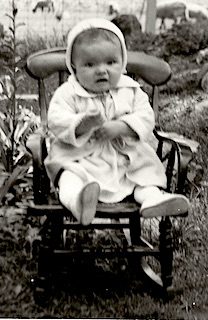
When my sister Dolly, as she was affectionately called by our parents, was three years old she was already taking dance lessons. Perhaps it was because our Mother was a product of The Great Depression. Mother was simply making sure that Dolly got all the opportunities that she didn’t get when she was a little girl growing up in Chicago during the depression.
In any case, Muriel was a person of immense talent! In my opinion she could do everything but sing. She excelled in school, sports, dancing (tap, ballet, toe), and acrobatics. Art-drawing? Yes, that was easy. Please, just don’t ask her to sing! From my viewpoint, I always pictured her as an adult. I saw her as the person to come to for frank advice on life; yet, she was only three years older than me. Her take on things always seemed more rational than that of my parents.
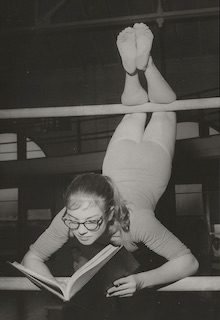
Maybe her maturity stemmed from her voracious appetite for reading at a young age which continued for a lifetime. I remember her sharing some thoughts with me: John F. Kennedy was a Roman Catholic and he would win the 1960 Presidential election. Atlas Shrugged! Who is John Galt? I’m reading The Objectivist Newsletter by Ayn Rand? Winston Churchill saved the world! Sometimes she would disappear in the bathroom and not reappear for one hour. Yes, sometimes rude, but another chapter read and consumed by Muriel!
Our parents, Evelyn and Harry Davis, met at a public swimming pool in Chicago. They had escaped family pressures in Chicago by moving 200 miles southeast to Speedway, a suburb of Indianapolis. Perhaps it was because the marriage of a Missouri Lutheran German boy to a Catholic Polish-Irish girl needed the freedom to grow and to lead life without family relatives butting in!
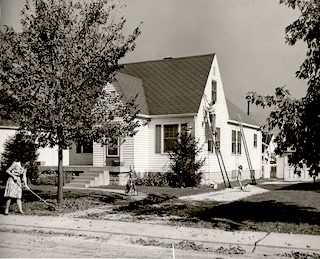
In 1912, Carl G. Fisher, James A. Allison, Arthur C. Newby and Frank H. Wheeler founded the city of Speedway to help accommodate several of their business interests. They also founded the Indianapolis Motor Speedway. The development of local Industries like Allison’s Division of General Motors, Prest-O-Lite Co., Link-Belt Co., Esterline Angus, and American Art Clay provided industry jobs for new arrivals in Speedway. One of those arrivals in the late thirties was our Father, Harry B. Davis. He had two years of college engineering at Carl Schurz High School of Chicago. He worked for Allison’s for nearly 30 years as a tool and die specialist. Harry and wife Evelyn purchased a small home at 1819 Christopher Lane. You could hear the “Offy” (Offenhauser) engines and an occasional super charged Novi at the Davis household throughout the month of May echoing from the Indianapolis Motor Speedway less than a mile from our home during the fifties.
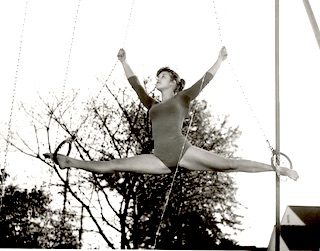
Allison’s, our Dad’s company, was cranking out V1710 airplane engines at a fast rate even prior to the bombing of Pearl Harbor. Muriel and I were both war babies. During the war, our Dad built an upstairs great room and a half bath in our two bedroom, one bath house. In our backyard he built a large sand box and screened in tower above the sand box. He constructed a 20-foot high swing and ring set. I learned my first muscle up on those metal rings. Muriel and I took dance lessons from the best teachers the city of Indianapolis had to offer: Kathryne Anderson, Carl and Ruby Zenick and even James Rozanas of Chicago. When Muriel was 10 years old, she began teaching her own classes in dance and acrobatics in the basement of our family home. She had an enrollment of nearly 100 students. Daily in the late afternoon, students would file through the back door home entrance of our home and go down to our tiny half basement. The ceiling was low and the converted oil furnace crowded the area. The floor was concrete and it dipped where the basement shower drain was. Dad blocked off the shower head, made a tabletop to place over the double utility sink for the record player to be placed, and he installed a wall-mounted ballet bar made of plumbing pipes for Muriel and her students to use. A thin, black, twenty foot long rubber mat was unrolled to perform acrobatics.
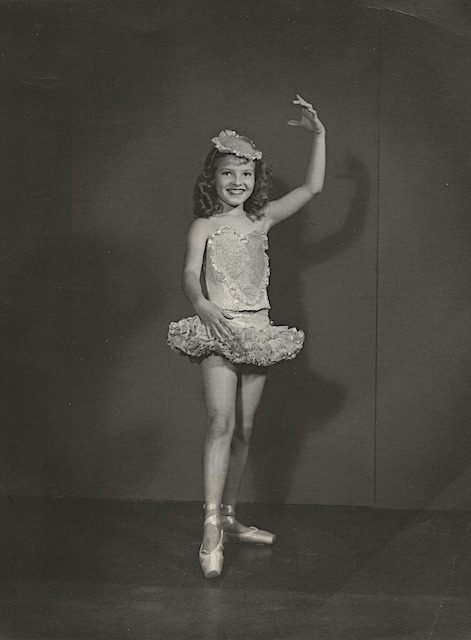
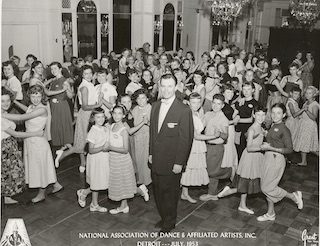
Muriel was in many dance recitals, exhibitions, park contests and seminars as a youngster. I remember Muriel performing on the stage at the famous Murat Temple, the oldest show stage in downtown Indy, and slicing her chin open while performing a Chinese split. It was good for two stitches at Methodist Hospital, the hospital where Muriel and I were born. I remember Muriel winning the City Park competition at Garfield Park with partner and Indiana University swimmer and diver-to-be, Billy Barton. Dad rigged a painted light blue bar out of a carpet roll with rope handles so Muriel could hold it on her feet while she performed a headstand in a straddle position. Billy would run from the stage wings and perform an arch dive roll over her and the bar. I remember Muriel performing with Joan Everling, a pianist who could play any music from ear! Joan would often crouch down backward under the piano and play it while dressed in high heels and an elegant evening gown! Muriel would swoop in on toe shoes or with a modern dance routine and perform to Joan’s piano music. A cardboard Bardahl Man (from Bardahl oil commercials) was often used as a prop while Muriel would dance to the Dragnet Theme feverishly waving a couple of veils with her hands and arms. The soldiers at Camp Atterbury and at Fort Benjamin Harrison enjoyed the show. Marguerita de Anguera, a New York native and an Uruguay raised ballet instructor and actress, polished Muriel’s ballet technique. Muriel was often the star student at the National Association of Dance & Affiliated Artists, Inc. workshops. Our Mother was not happy that Muriel chose gymnastics over ballet when that decision had to be made.
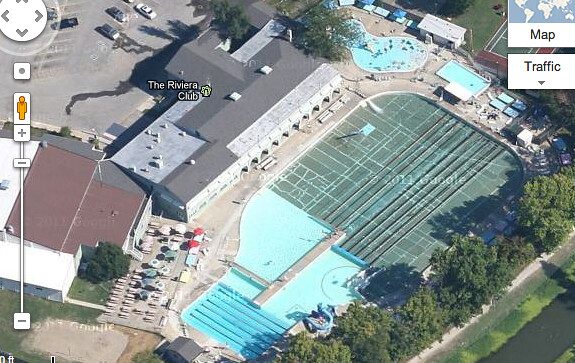
During many summers our family would swim at the Riviera Swim Club on Illinois Avenue on the North side of Indianapolis. Muriel briefly pursued springboard diving with Coach Frank Galvich. The pool was shaped like a giant milk bottle and featured a giant slide with a paddlewheel under it. We had some good times there!
Muriel and I both jumped back and forth between public and parochial school education from K thru eighth. Muriel announced to our parents that she would like to attend St. Mary’s Academy rather than the local Speedway High School. Was it because of her religious beliefs kicking in or was it because Athenaeum Turners was across the street from St. Mary’s in downtown Indianapolis?
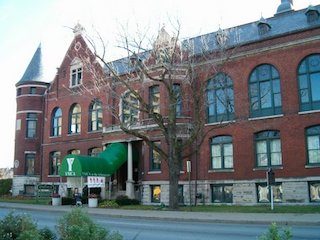
Athenaeum was a German social club with a restaurant and beer hall downstairs and a gymnasium upstairs. Dan Maki, who worked with my dad at Allison’s, told my dad about gymnastics instruction at Athenaeum Turners. We began attending classes and Sunday workouts. I think I was seven and Muriel was ten. In those days, we would take the city bus downtown and transfer to another bus just to get to class. Dan was a wonderful hand-balancer and family man who would workout in red bikini swimming trunks. He always sported a good tan from his sun lamp and was like a feather on his feet. All the women gymnasts liked to hand-balance with Dan.
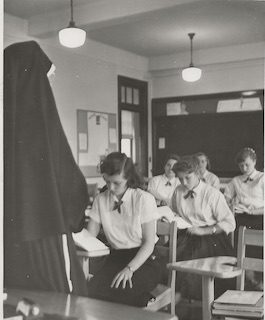
Muriel would take the city bus early in the morning to St. Mary’s and would return home by city bus at 9 or 10 PM. After high school classes ending at 2:30 PM, Muriel would paint, draw and get a little mentoring from her favorite art teacher, Sister Cecelia. It was Muriel’s favorite class. She would walk two blocks down the street to the Athenaeum Turners and do her homework in the basement locker room. A three-hour gymnastics workout followed.
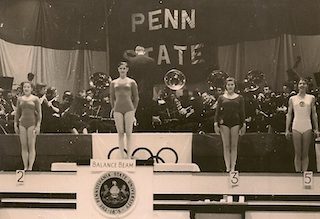
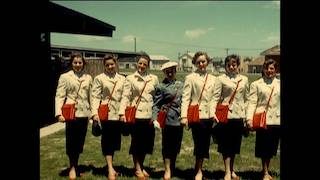
Muriel soon began competing in open AAU and Turnverein meet competitions in cities like Cleveland and Dayton, Ohio or in Louisville, Kentucky. One day when she was 15, her coach, Walter Leinert, informed our parents that Muriel was going to the NAAU and Olympic trials at Penn State University. The top six gymnasts would become the 1956 Women’s Gymnastics Olympic Team to Melbourne, Australia. Walt emphasized to our parents that Muriel was going only for competition experience. He maintained that 23-year-old teammate Sandy Ruddick would make the team and so would Myra Perkins, and possibly Sharon Phelps. The Davis family didn’t go to the trials. The little voice that called late that Sunday evening sounded excited. “I won floor exercise and made the United States Olympic Team to Melbourne, Australia,“ said Muriel! Muriel celebrated her sixteenth birthday on October 7. It was just in time to go “down under” and be eligible for the Olympic games. Dolly was indeed an Olympian!
Coming soon
Part 2: Muriel Grossfeld, The Olympic Experience Continues: Rome